
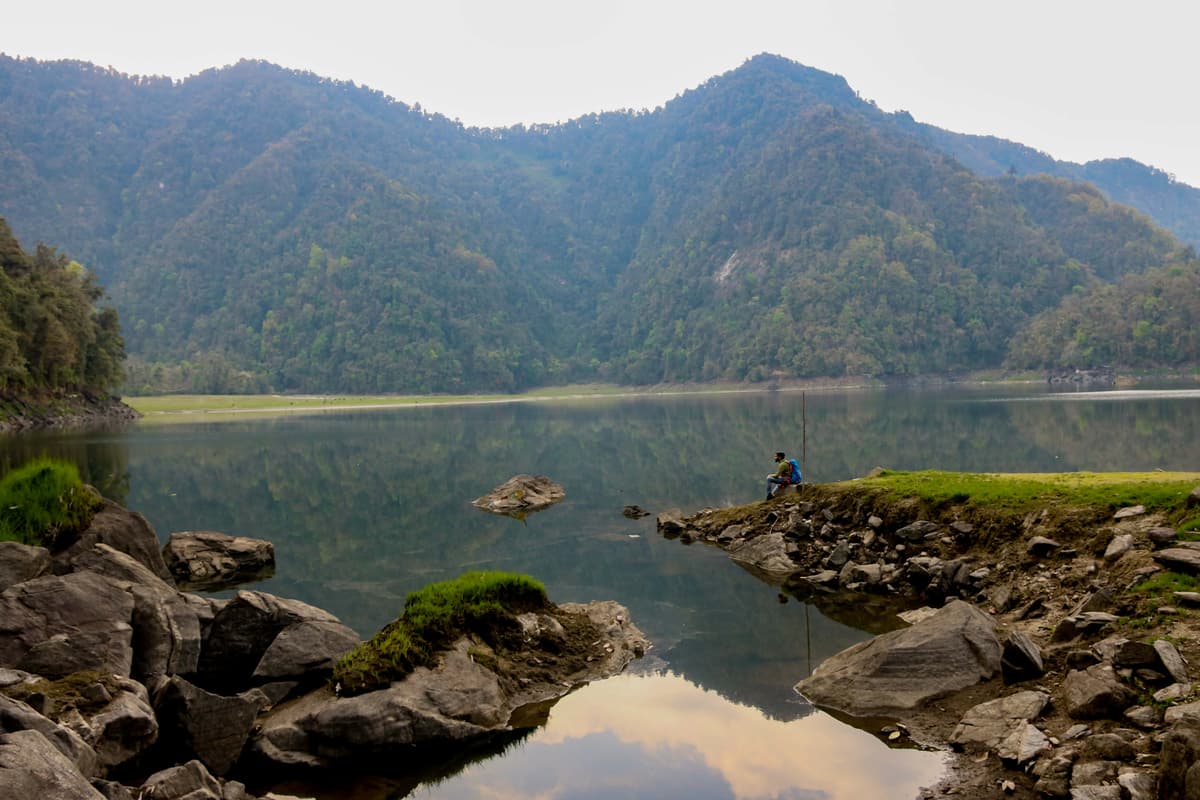
Happiness Trek – 14 Days Central Bhutan Trekking & Village Immersion Journey
Tour Includes
Tour includes the services of Indruka Tours and Travels's Tour Manager.
Tour Highlights
Request a Callback
We‘ll reach you within minutes
🔒 Your number is never shared with third parties
Itinerary (Day Wise)
Viewing itinerary for 14 days of Paro.
Day 1
Arrive in Paro, Bhutan – Himalayan Scenic Flight, Welcome Orientation & Journey Briefing
Arrive at Paro International Airport (PBH) on one of the world's most breathtaking mountain approaches, with sweeping aerial views of the Eastern Himalayas – including some of the highest and most remote glacial peaks on earth – before touching down in the narrow, forested Paro Valley.Be warmly received on arrival by your dedicated Indruka Tours guide and driver, and transfer to your hotel for check-in and a chance to rest after the journey.The evening begins with a comprehensive orientation briefing covering the full arc of the 14-day Happiness Trek – the sacred temples of Bumthang, the remote Mangdi Chu River valley, the historic manor of Bemji Nagtshang, the wetlands of Phobjikha, and the iconic finale at Tiger's Nest.Enjoy a welcome dinner with your guide, establishing the warm relationship that will sustain the group through two weeks of extraordinary shared experience in the Kingdom of Happiness.Overnight Paro or Thimphu.
Day 2
Domestic Flight to Bumthang – Sacred Temples of Chamkhar Valley: Jambay Lhakhang, Kurje Lhakhang & Tamshing Monastery
Board the spectacular domestic flight to Bumthang (weather permitting) – approximately 30 minutes of extraordinary aerial views over the Himalayan peaks, the Black Mountain Range (4,922m), and the deep river gorges of central Bhutan before descending into the wide, forested Jakar Valley at 2,800 meters.Begin a spiritual hiking tour of 6–8 km through the Chamkhar Valley, following trails that link the most sacred sites in Bumthang – a valley revered as Bhutan's spiritual heartland, with the highest concentration of ancient temples and Guru Rinpoche-linked pilgrimage sites in the entire kingdom.Visit Jambay Lhakhang at 2,700m – one of the oldest temples in Bhutan, founded in the 7th century by Tibetan Emperor Songtsen Gampo as one of 108 temples built simultaneously across the Himalayan region to pin down a demoness obstructing the spread of Buddhism.Continue to Kurje Lhakhang at 2,750m – among the most revered pilgrimage destinations in Bhutan – where Guru Rinpoche (Padmasambhava) is said to have meditated in the cliffside caves in the 8th century, leaving the sacred imprint of his body on the rock visible within the innermost shrine of the oldest temple.An optional 2 km extension reaches Tamshing Monastery at 2,700m – founded in 1501 by treasure-discoverer Pema Lingpa – whose walls bear some of the oldest and finest Buddhist murals in Bhutan, painted according to tradition by Pema Lingpa himself, alongside a sacred chainmail vest used in purification rituals.The afternoon includes a visit to a Swiss agricultural project site to sample Bhutanese artisan products – Red Panda beer, farmhouse cheese, apple juice, and wildflower honey – before a relaxed stroll through Chamkhar town for local handicrafts. Overnight Bumthang.
Day 3
Ogyen Choling Palace Museum, Pemacholing Nunnery Drum Ceremony & Mebartsho Burning Lake Pilgrimage
Begin the day at Ogyen Choling – the 'Palace of Bliss' – once home to the 14th-century Buddhist scholar Longchen Rabjam and now a private heritage museum preserving Bhutan's noble history through royal artefacts, ancient thangkas, ceremonial objects, and manuscripts that bring the aristocratic world of Bumthang vividly to life.If fortunate, meet Azhi Kunzang Choden – a distinguished Bhutanese historian, author, and direct descendant of the palace's noble lineage – whose personal insights transform historical facts into living family memory and offer a depth of cultural encounter rarely accessible to visitors.On the return from Tang Valley (approximately 25 km), stop at Pemacholing Nunnery at 2,700m, home to over 300 Buddhist nuns who have dedicated their lives to prayer and contemplative practice – one of the largest nunneries in Bhutan.Witness the sacred Choed Drum Ceremony: a deeply moving ritual of synchronized chants, drums, and bells performed by the nuns, believed in the Vajrayana tradition to purify negative karma and generate powerful blessings for all who attend.Complete the day with a short 1 km pilgrimage hike to Mebartsho – the Burning Lake – where the revered 15th-century treasure-discoverer Pema Lingpa is said to have plunged into the river holding a burning butter lamp and emerged with sacred relics submerged by Guru Rinpoche centuries before, the lamp still miraculously alight.The site remains one of the most spiritually charged pilgrimage destinations in Bumthang, adorned with prayer flags, butter lamp offerings, and the quiet reverence of Bhutanese devotees. Overnight Bumthang.
Day 4
Trek Day 1 – Trongsa to Kasiphey Monastery Camp | 14.4 km · 5–6 Hours · 3,050m
Transfer by vehicle on a 2-hour scenic drive to Trongsa – passing the commanding Trongsa Dzong on its forested ridge above the Mangde Chhu gorge – where the trekking crew, pack animals, and camp equipment are assembled for the handover of luggage and the formal beginning of the wilderness phase of the Happiness Trek.The first trekking stage begins with a gradual ascent through dense oak and mixed temperate forest, where filtered light falls through ancient canopy and the sounds of the valley below fade into birdsong and the crunch of trail underfoot.The trail climbs steadily to Dhemlay La Pass at approximately 3,050m – a high-altitude threshold where the landscape opens dramatically and a breathtaking panoramic view of the remote Nubchutey region unfolds across a wide arc of Bhutanese highland terrain.After crossing the pass, the trail descends to the first campsite, positioned just below Kasiphey Monastery – a serene monastic institution founded in 1999 by Gangtey Tulku Rinpoche, home to over 50 young monks immersed in Buddhist studies, debate, and daily practice in one of central Bhutan's most remote settings.Your trekking crew will have camp fully prepared on arrival: tents, dining shelter, and a hot cooked meal waiting as the temperature drops and the monastery's evening prayers drift quietly across the meadow.Trek details: 14.4 km · 5–6 hours · Elevation gain 485m. Overnight Kasiphey Monastery Camp (3,050m).
Day 5
Trek Day 2 – Kasiphey to Drongthang Village | 14.4 km · 4–5 Hours · 2,590m
Descend from the pass toward the Mangdi Chu River – the central artery of this trek – following a trail that winds through terraced farmland and past ancient Bhutanese farmhouses whose wooden shutters and painted mud walls have looked down on this valley floor for centuries.The gentle rhythm of flowing water, birdsong, and rustling forest accompanies the route as it follows the valley floor, ascending gently past an ancient stone chorten before climbing to the remote village of Drongthang at 2,590 meters.Drongthang carries deep spiritual significance: it is believed to mark the site where the Bodhisattva Gyalpo Drimed Kuenden journeyed from India as early as the 3rd century and established a temple in this hidden valley – making it one of the oldest spiritually recognized sites on the entire trekking route.The surrounding forest is home to the takin – Bhutan's extraordinary national animal – which roams these highland slopes in small groups and may be encountered on quieter sections of the trail.Settle into camp and spend the early evening with the village headman and elders, gaining a rare, unhurried insight into the traditions, beliefs, and daily rhythms of one of central Bhutan's most remote farming communities.Trek details: 14.4 km · 4–5 hours · Elevation gain 300m · Elevation loss 360m. Overnight Drongthang Village Camp (2,590m).
Day 6
Day Hike to Mangdiphu – Bhutan's Hidden Shangri-La, Farm Activities, Ara Moonshine Tasting & Village Folk Dance Celebration
Today's hike leads into one of the most extraordinary hidden corners of the entire Happiness Trek: Mangdiphu – a secret Baeyul (hidden Shangri-La) in the upper reaches of the Mangdi Chu River, consisting of just four traditional farmhouses and believed to be the last inhabited settlement upstream, untouched by roads, electricity, or modernity.The trail meanders through whispering pine forest, emerald highland meadows, and gently cascading streams, with dark rocky peaks embracing the valley on all sides – an atmosphere of profound natural and spiritual seclusion unlike anything encountered elsewhere on the route.Enjoy lunch at Mangdiphu alongside immersive farm activities: milking cows by hand, churning butter in wooden barrels, and pressing farmhouse cheese – learning the ancient, labor-intensive food practices that have sustained these highland communities across centuries of self-sufficient mountain life.Hike back to Drongthang in the afternoon and visit a traditional farmhouse to learn the centuries-old process of brewing Ara – Bhutan's traditional grain-based moonshine – with the option to sample a warm glass by the hearth as the family shares stories of valley life.As twilight settles over Drongthang, the village gathers in honor of their guests: flickering butter lamps illuminate a courtyard where traditional folk dances are performed under the full Himalayan sky, the music and laughter building to a shared feast of stories, ara, and the particular joy of being made genuinely welcome in a place that receives very few visitors.Overnight Drongthang Village Camp.
Day 7
Trek Day 3 – Drongthang to Bemji Nagtshang Historic Manor | 16 km · 4–5 Hours
Depart Drongthang on a trail that descends gently toward the Mangdi Chu River, passing through quiet hamlets, stone-walled field boundaries, and ancient terraced farmland – a landscape where the timeless rhythms of rural Bhutanese life play out in full view: farmers tending crops, prayer flags animated by valley wind, and the river carving its way south through the gorge below.The route follows the river for a comfortable stretch before ascending gradually to Bemji – a historically significant village whose most remarkable landmark is Bemji Nagtshang, an ancient manor house that served as the ancestral home of Bhutan's past temporal rulers and as the hereditary seat of descendants of the revered Gyalsey Tenzin Rabgyal lineage, closely connected to the Gangtey Tulku reincarnate lama tradition.Camp is set up in the schoolyard of Bemji's small community school – a position of sweeping views across the village and valley, offering one of the most atmospheric overnight settings of the entire trek.If the school is in session, the children of Bemji gather in the early evening to perform traditional Bhutanese songs – a spontaneous, genuinely moving performance of the kind that no amount of itinerary-planning can replicate and that travelers remember for the rest of their lives.Trek details: 16 km · 4–5 hours · Elevation loss 90m. Overnight Bemji Nagtshang Village Camp.
Day 8
Trek Day 4 (Final) – Bemji to Bjizam Village & Drive to Phobjikha Valley via Pele La Pass (3,353m)
Begin the final trekking morning with an optional visit to the school's morning assembly – one of the most quietly moving experiences on the entire Happiness Trek: students standing in rows singing the Bhutanese national anthem, followed by a collective meditation session, before the school day begins in classrooms lined with hand-painted educational murals.The final descent follows the Mangdi Chu River to its crossing point, where the trail winds along the mountainside above the opposite bank before reaching the village of Bjizam – a moment of genuine triumph as the awaiting vehicle marks the end of four days of remote trekking through central Bhutan's most rarely visited valleys.Celebrate the trekking achievement with a scenic picnic lunch prepared by the camp kitchen crew before bidding a heartfelt Tashi Delek farewell to the trekking team – the cooks, handlers, and camp staff whose expertise and warmth have made wilderness comfort possible in one of Bhutan's most remote regions.Board the vehicle and drive toward Phobjikha Valley, crossing Pele La Pass at 3,353 meters (11,000 ft) – where prayer flags flutter against a wide Himalayan sky and the road descends into the cooler, open plateau of the western highlands.Arrive in Phobjikha Valley by evening and check in to your hotel or guesthouse. Overnight Phobjikha Valley.
Day 9
Phobjikha Valley – Black-Necked Crane Centre, Gangtey Monastery & Panoramic Nature Trail
Spend a full rest and exploration day in Phobjikha – a wide, open glacial valley of ethereal beauty and extraordinary ecological importance, designated as a protected conservation area managed by the Royal Society for the Protection of Nature (RSPN) in partnership with WWF.Visit the Black-Necked Crane Information Centre to learn about the endangered Black-Necked Crane (Grus nigricollis), which migrates annually from the Tibetan Plateau to spend the winter in Phobjikha's marshy wetlands – a bird deeply revered in Bhutanese culture and believed to perform a ceremonial circling ritual over Gangtey Monastery upon arrival and departure each season.Visit Gangtey Monastery (Gangtey Gonpa) – a magnificent 17th-century Nyingmapa monastery perched on a forested knoll above the valley floor, one of the most important centers of the Nyingma Buddhist lineage in Bhutan, its ancient prayer halls and butter lamp shrines offering a deep sense of living spiritual continuity.Follow the optional Gangtey Nature Trail along the valley ridge (approximately 2.99 km · ~1.5 hours easy) through fragrant silver fir and pine forest, with panoramic views of the wetland below and – in season – the sight of black-necked cranes gliding gracefully over the marsh in the golden afternoon light.Spend the evening in quiet reflection, allowing the preceding four days of remote trekking to settle into the kind of deep, unhurried contentment that Bhutan's landscapes tend to produce. Overnight Phobjikha Valley.
Day 10
Phobjikha to Punakha via Lawala Pass – Punakha Dzong & Khamsum Yulley Namgyal Chorten Hike
Depart Phobjikha and begin the 85 km descent of 1,830 meters from Lawala Pass through increasingly subtropical forest and river valleys, arriving in the warm, fertile Punakha Valley – once Bhutan's royal capital and still the winter residence of the Central Monk Body.After lunch, visit Punakha Dzong – built in 1637 by Zhabdrung Ngawang Namgyal at the precise confluence of the Pho Chhu (Father River) and Mo Chhu (Mother River) – an architectural masterpiece housing sacred relics and the spiritual legacy of Bhutan's unification, and still the venue of the kingdom's grandest festivals: Punakha Drubchen and Punakha Tshechu.In the afternoon, complete a 3.5 km hike through rice fields and pine forest to Khamsum Yulley Namgyal Chorten – a four-storey hilltop temple commissioned by Her Majesty the Royal Queen Mother and built over nine years for the peace and prosperity of Bhutan – whose rooftop offers sweeping panoramic views of the Mo Chhu River, rice terraces, and the surrounding Himalayan foothills.Return to Punakha for dinner and a well-earned rest in the warmth of the valley. Overnight Punakha.
Day 11
Punakha to Thimphu via Dochula Pass & Chimi Lhakhang – Capital City Arrival & Free Afternoon
Depart Punakha and ascend to Dochula Pass at 3,100 meters, where the 108 Druk Wangyal Chortens stand against a panoramic Eastern Himalayan skyline – on clear days including Gangkar Puensum (7,570m), the world's highest unclimbed peak – one of the most iconic high-altitude viewpoints in all of Bhutan.Before descending toward Thimphu, make a short detour for a 1.5 km walk through golden paddy fields to Chimi Lhakhang – the beloved Fertility Temple built in the 15th century by disciples of the 'Divine Madman' Lama Drukpa Kuenley – a pilgrimage site drawing couples from across Bhutan seeking blessings for children, reached through some of the valley's most picturesque farmland.Arrive in Thimphu at 2,320 meters by early afternoon and enjoy the first taste of Bhutan's charming, unhurried capital – a city unlike any other, where traditional Bhutanese architecture codes govern every building and the national sport is archery.Spend the free afternoon on a self-guided stroll along Norzin Lam lined with handicraft stores, thangka galleries, and local cafés; visit the Centenary Farmers Market; and stop at Clock Tower Square for butter tea and momos in the company of Thimphu locals.Overnight Thimphu.
Day 12
Thimphu Sightseeing – Weekend Market, Weaving Centre, Takin Preserve & Scenic Drive to Paro
If visiting on a weekend, begin at Thimphu's vibrant weekly market – where farmers and artisans from surrounding valleys gather to sell seasonal produce, handmade textiles, hand-carved wooden masks, medicinal herbs, and traditional crafts – one of the most authentic and visually rich public spaces in Bhutan.Visit the Green Weaving Centre and National Textile Museum to discover Bhutan's extraordinary weaving heritage – a living tradition in which intricate patterns carry encoded messages of identity, region, and social standing, and where master weavers still produce cloth on hand-operated looms using techniques unchanged for centuries.Tour the Traditional Handmade Paper Factory where Deh-sho paper is crafted from the bark of the Daphne tree and dried herbs – a 15th-century technique producing some of the most durable natural paper in the world – followed by the Archery Grounds, where Bhutan's national sport unfolds with a particular blend of extraordinary skill and theatrical banter.Visit the Motithang Takin Preserve at 2,600m to see Bhutan's extraordinary national animal – the takin, a unique bovid found only in the Eastern Himalayan region and connected in Bhutanese mythology to the Divine Madman who allegedly created the creature by combining a goat skull with a cow's body.In the late afternoon, embark on the 2-hour scenic drive to Paro – winding through pine forest, terraced farmland, and traditional villages before arriving to sweeping views of Rinpung Dzong and the Pa Chu River in the valley below. Overnight Paro.
Day 13
Tiger's Nest Hike – Paro Taktsang Monastery at 3,120m, Kyichu Lhakhang & Farewell Dinner
Begin Bhutan's most iconic and spiritually significant hike with an early start: Paro Taktsang – the Tiger's Nest Monastery – clings to a sheer granite cliff at 3,120 meters above the Paro Valley floor, the single most revered sacred site in Bhutan and one of the most dramatic religious landmarks on earth, founded in 747 CE when Guru Rinpoche is said to have arrived on a flying tigress to subdue evil spirits before establishing Buddhism across the Himalayan kingdoms.The trail ascends through fragrant blue pine forest and prayer-flag corridors for approximately 2–3 hours, reaching the Taktsang Cafeteria viewpoint at 2,800m – one of the finest photography positions in all of Bhutan – before the final climb across a suspension bridge above a dramatic waterfall gorge to the monastery entrance.Explore the monastery's interconnected sacred temples, meditation caves, and thangka-hung shrines in a round trip of approximately 13.2 km over 5–6 hours – a fitting physical and spiritual culmination for a group that has trekked 56 km through central Bhutan's most remote valleys over the preceding days.In the afternoon, visit Kyichu Lhakhang at 2,250m – one of Bhutan's oldest temples, built in 659 CE by Tibetan Emperor Songtsen Gampo as part of his 108-temple campaign – its two shrines representing seven centuries of active devotion and remaining among the most atmospherically intimate sacred spaces in the Paro Valley.Optionally, end the afternoon with a traditional Bhutanese hot stone bath (menchu) – heated river stones lowered into a wooden tub of mineral-rich water – a centuries-old restorative ritual that eases tired muscles and marks the journey's end with appropriate ceremony.The evening is marked by a special farewell dinner celebrating 14 extraordinary days through the heart of Bhutan – a meal of traditional cuisine shared with the guide and celebrating the memories, landscapes, and human connections that have defined this remarkable journey. Overnight Paro.
Day 14
Departure from Paro International Airport – Tashi Delek, Bhutan
Rise for a final Bhutanese morning – perhaps a last walk through Paro's painted-shopfront main street, a final cup of butter tea, or simply a quiet moment in the valley as the peaks of the Himalayan range catch the early light above the ridgeline.Your guide and driver accompany you to Paro International Airport (PBH), offering heartfelt farewells and traditional white scarves as blessings for safe and happy travels – the same warmth of Bhutanese hospitality that has accompanied every step of the past 14 days.Board your flight for one final glimpse of Bhutan's rolling pine-covered hills and snow-capped Himalayan peaks through the aircraft window – the Land of the Thunder Dragon receding below, carrying the quiet certainty that it will welcome you back.Tashi Delek – may the path ahead be filled with happiness, peace, and endless discovery.
Know, before you book
Please note: Seats are subject to availability at time of booking.
Airline: On group tours we fly with group-friendly airlines.
Economy class by default.
Upgrades to Business / First Class available on request.
Tour Details
Tour Information
Read this to prepare for your tour in the best way!
- Airfare (Economy class) (optional)
- 3-star and above hotel accommodation (twin sharing)
- Daily breakfast ,Lunch & dinners
- English-speaking Tour Manager throughout
- Government Taxes
- Travel insurance (optional)
- Sightseeing Fees & Visa
Need to Know
- Carry comfortable walking shoes — cobblestone streets ahead!
- Currency: Dollar/ Crypto. ATMs are widely available.
- Weather in June: 18 °C – 25 °C. Light jacket recommended.
- Sustainable Development Fee (SDF) of USD100 per night per adult and USD50 for children aged 5 to 12 years old. Children below 5 years are waived.
- A one-time visa application fee of USD40.
- For Indian: Sustainable Development Fee (SDF) of Rs.1200 per night per adult and Rs.600 for children aged 5 to 12 years old. Children below 5 years are waived and Government of Bhutan will provide on arrival visa.
Cancellation Policy
| Days before departure | Cancellation charge |
|---|---|
| 60+ days | 10% of tour cost |
| 30–59 days | 25% of tour cost |
| 15–29 days | 50% of tour cost |
| 0–14 days | 100% of tour cost |