
Bhutan Cultural Journey – 10 Days Paro · Thimphu · Phobjikha · Bumthang · Punakha
Tour Includes
Tour includes the services of Indruka Tours and Travels's Tour Manager.
Tour Highlights
Request a Callback
We‘ll reach you within minutes
🔒 Your number is never shared with third parties
Itinerary (Day Wise)
Viewing itinerary for 10 days of Paro.
Day 1
Arrive in Paro, Bhutan – Himalayan Scenic Flight, Tachog Lhakhang Iron Chain Bridge & Transfer to Thimphu
Experience one of the world's most breathtaking mountain approaches as the aircraft descends into Bhutan, offering sweeping panoramic views of the Eastern Himalayas – some of the highest and most remote glacial peaks on earth – before touching down at Paro International Airport (PBH).Clear immigration and customs before being warmly received by your Indruka Tours guide and driver, and begin the scenic one-hour transfer westward toward Thimphu, Bhutan's uniquely unhurried capital.En route, shortly after Isuna village and before reaching Chhuzom confluence, stop at the historic Tachog Lhakhang – a sacred 14th-century temple set gracefully at the base of a mountain along the Paro–Thimphu highway, accessible via a traditional iron chain bridge over the Paro River.The temple was founded by the revered Tibetan saint and master engineer Thangtong Gyalpo following his vision of Balaha – the spiritual horse and an emanation of Avalokiteshvara – the same legendary figure credited with constructing 108 iron chain bridges across the Himalayan kingdoms, revolutionizing travel and trade across the high passes of Bhutan, Tibet, and Nepal.The present bridge was reconstructed in traditional style in 2005 after the original was lost to floods, and the temple remains privately maintained to this day by descendants of Thangtong Gyalpo – a living thread of hereditary custodianship spanning six centuries.Arrive in Thimphu by early evening and check in to your hotel, beginning your immersion into the remarkable cultural world of the Kingdom of Happiness. Overnight Thimphu.
Day 2
Thimphu Sightseeing – Memorial Chorten, Buddha Dordenma, Traditional Archery & Vegetable Market
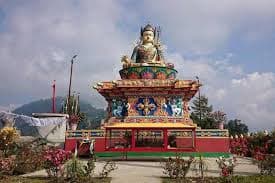
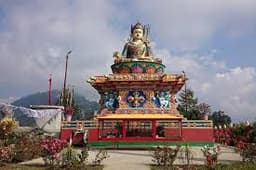
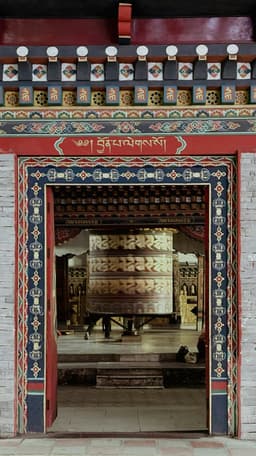
Begin the morning at the National Memorial Chorten – an iconic stupa built in 1974 in honor of Bhutan's beloved Third King Jigme Dorji Wangchuk – where devoted locals gather daily to circumambulate and spin prayer wheels in a deeply moving expression of living Buddhist faith unchanged across generations.Drive to Kuensel Phodrang to visit the colossal Buddha Dordenma statue – a 51.5-meter gilded bronze Shakyamuni Buddha overlooking the entire Thimphu Valley from its hilltop throne, housing 125,000 smaller Buddha statues within its interior and offering sweeping panoramic views of the capital and surrounding ridgelines.For those seeking a more active morning, an optional forest hike from Buddha Point to Changangkha Lhakhang winds through quiet pine trails and open ridgelines, taking approximately two hours and offering intimate, uncrowded views of Thimphu rarely seen by visitors.In the afternoon, visit the bustling Centenary Vegetable Market – one of the most colorful, authentic snapshots of everyday Bhutanese life available in Thimphu – where farmers from surrounding valleys sell seasonal produce, dried chilies, yak cheese, local spirits, and traditional handicrafts.Conclude the afternoon at the traditional archery ground, where Bhutan's national sport is played with a uniquely Bhutanese blend of extraordinary skill, boisterous team rivalry, and deeply rooted community spirit – one of the most entertaining and culturally revealing sights in the capital.Overnight Thimphu.
Day 3
Thimphu to Phobjikha Valley via Dochula Pass – 108 Chortens, Himalayan Panoramas & Gangtey Monastery
Depart Thimphu and ascend to Dochula Pass at 3,050 meters – one of Bhutan's most celebrated high-altitude viewpoints – where, on clear days, a breathtaking panoramic arc of the Eastern Himalayan range unfolds: Masagang, Tsendagang, Terigang, Jejegangphugang, Kangphugang, Zongphugang, and the supreme Gangkar Puensum (7,570m) – the world's highest unclimbed peak – stretching in an unbroken chain along the Bhutan–Tibet border.Explore the 108 Druk Wangyal Chortens set against the Himalayan skyline before continuing the descent through subtropical forest and winding mountain roads into the broad Wangduephodrang Valley, arriving in time for a riverside lunch.Continue climbing into the cooler highlands, arriving in the tranquil Phobjikha Valley – also known as Gangtey Valley – a wide, open U-shaped glacial valley of extraordinary ecological and cultural importance, spanning approximately 163 square kilometres and managed as a protected conservation area by the Royal Society for the Protection of Nature (RSPN).Phobjikha is the designated winter sanctuary of the endangered Black-Necked Crane (Grus nigricollis), which migrates annually from the Tibetan Plateau and is deeply revered in Bhutanese culture – the cranes are believed to perform a traditional circling ritual over the monastery upon arrival and departure each season.Visit Gangtey Monastery (Gangtey Gonpa) – a magnificent 17th-century Nyingmapa monastery perched on a forested ridge above the valley floor, one of the most important centers of the Nyingma Buddhist lineage in Bhutan.Stop at the Black-Necked Crane Information Centre to learn about the valley's extraordinary ecology and the conservation efforts that have made Phobjikha one of Bhutan's most celebrated natural heritage sites. Overnight Phobjikha Valley.
Day 4
Phobjikha to Bumthang Tang Valley via Chendebji Chorten & Trongsa Dzong – Bhutan's Historic Seat of Power
Depart Phobjikha and begin the long scenic drive eastward into Bhutan's dramatic central highlands, stopping first at Chendebji Chorten – a striking whitewashed stupa modeled on the eyes-painted style of Kathmandu's Swayambhunath, built in the 18th century by Lama Shida from Tibet to subdue an evil spirit believed to have been defeated at this valley junction.Arrive after lunch at Trongsa Dzong – built in 1648 and for centuries the absolute seat of power over central and eastern Bhutan, the historic base from which Bhutan's first two Kings governed the kingdom before unifying it under a single monarchy.Explore its extraordinary multi-level architecture cascading dramatically along the ridge above the Mangde Chhu gorge – a fortress of layered courtyards, secret corridors, and sacred temples that still carries the full weight of Bhutan's political and spiritual legacy, and from which all four of Bhutan's Kings held the title of Trongsa Penlop before ascending the throne.Continue eastward into the warmer, wider valleys of Bumthang – Bhutan's spiritual heartland – arriving at Tang Valley by late afternoon.Visit Ogyen Choling Palace – originally built in the 16th century by Deb Tsokye Dorje, with the present structure comprising a temple, servants' quarters, and main residential building reconstructed following the devastating 1897 earthquake, now operating as a heritage guesthouse whose revenue directly supports the property's ongoing preservation.If available, a rare opportunity may arise to dine with Dr. Walter Roder, former Country Director of Helvetas Swiss Cooperation, for a deeply insightful conversation on Bhutan's rural development and cultural heritage. Overnight Tang Valley.
Day 5
Bumthang Tang Valley – Ogyen Choling Museum, Kurje Lhakhang & Jakar Dzong
Begin the morning with a visit to the Ogyen Choling Museum, housed within the palace complex itself – where centuries-old thangkas, royal artefacts, ceremonial costumes, and domestic implements bring the noble history of Bumthang's aristocratic families vividly and intimately to life.Return to Bumthang Valley and visit the sacred Kurje Lhakhang – one of the most revered pilgrimage sites in all of Bhutan, marking the place where Guru Rinpoche (Padmasambhava) is believed to have subdued a local demon and left the imprint of his body on a rock in the 8th century, the earliest physical trace of the master's presence in Bhutan.Explore the three interconnected temples of the Kurje Lhakhang complex, the oldest of which dates to the 8th century and contains the sacred rock imprint within a shrine – layers of devotional history accumulating across thirteen centuries of unbroken pilgrimage.Visit Jakar Dzong – the 'Castle of the White Bird' – a striking 17th-century fortress gracefully perched on a ridge above Bumthang Valley with panoramic views of the surrounding farmland, its whitewashed walls, intricate carved woodwork, and tiered golden roofs representing one of Bhutan's finest examples of dzong architecture in a highland setting.Spend the evening absorbing the deep, quiet atmosphere of Bumthang – a valley where the concentration of ancient temples, sacred springs, and meditation sites per square kilometer is higher than almost anywhere else in the Himalayan Buddhist world. Overnight Jakar, Bumthang.
Day 6
Bumthang to Punakha via Wangdue Phodrang Dzong & Chimi Lhakhang – Temple of Fertility
Depart Bumthang and begin the long scenic drive westward back through Bhutan's central mountain spine – passing Trongsa Dzong once more on the ridge above the gorge – and descending gradually toward the warmer subtropical valleys of the west.Stop at Wangdue Phodrang Dzong, perched on a narrow strategic ridge at the confluence of the Puna Tsang Chhu and Dang Chhu rivers – one of Bhutan's most dramatically positioned fortresses, its commanding height above the valley reflecting its centuries-long role as a defensive and administrative stronghold for the western districts.Continue to Chimi Lhakhang in the Lobesa Valley – the beloved Fertility Temple dedicated to Lama Drukpa Kuenley, the 15th-century 'Divine Madman' whose unconventional methods of enlightened teaching through humor, song, and radical behavior became a uniquely Bhutanese expression of Buddhist compassion.Reach the temple via a 30-minute walk through golden paddy fields and flowering farmland – one of the most pleasant and scenic short walks in Bhutan – with an option to drive closer and enjoy a traditional Bhutanese farmhouse lunch in the valley.Arrive in the magnificent Punakha Valley by late afternoon – once Bhutan's royal capital and still one of its most historically significant regions – checking in to your hotel as the evening light plays across the river. Overnight Punakha.
Day 7
Punakha Sightseeing – Khamsum Yulley Namgyal Chorten Hike & Punakha Dzong
Begin the morning with a scenic hike to Khamsum Yulley Namgyal Chorten – a four-storey hilltop temple commissioned by Her Majesty the Royal Queen Mother and built over nine years by skilled traditional artisans following precise Buddhist scriptures, dedicated to the peace, prosperity, and spiritual protection of Bhutan and all sentient beings.The 45-minute trail ascends through terraced rice paddies and farmland to a ridge offering some of the finest views in the Punakha Valley – the Mo Chhu River below, emerald fields stretching in every direction, and the distant silhouettes of Himalayan ridgelines framing the horizon.The temple's interior walls are lavishly adorned with painted deities, guardian figures, and intricate mandalas executed in the finest Bhutanese traditional style, offering a contemplative and visually extraordinary counterpoint to the grandeur of the dzong below.In the afternoon, visit Punakha Dzong – widely regarded as the most beautiful dzong in Bhutan – standing majestically at the confluence of the Pho Chhu (Father River) and Mo Chhu (Mother River), its whitewashed walls, gilded spires, and riverine setting forming an architectural masterpiece of incomparable elegance.Learn the dzong's extraordinary history: built in 1637 by Zhabdrung Ngawang Namgyal, it served as Bhutan's capital until 1955, hosted the first coronation of Bhutan's monarchs, and has withstood fires, earthquakes, and floods – including a catastrophic glacial lake outburst flood in 1994 – standing today as a symbol of Bhutanese spiritual resilience. Overnight Punakha.
Day 8
Punakha to Paro via Ta Dzong National Museum & Rinpung Dzong – Paro Valley Arrival
Depart Punakha and drive westward toward the Paro Valley, one of Bhutan's most fertile, historically significant, and scenically beautiful regions, following the river valleys through forested gorges and traditional farming communities.Arrive in Paro for afternoon sightseeing beginning at Ta Dzong – the National Museum of Bhutan – a striking circular watchtower originally constructed in the 17th century to defend Paro Dzong against Tibetan invasions, its galleries now displaying an outstanding collection of ancient thangkas, royal artefacts, natural history specimens, weapons, and ceremonial objects tracing Bhutanese civilization across more than fourteen centuries.Descend to the majestic Rinpung Dzong – 'Fortress on a Heap of Jewels' – built in 1646 by Zhabdrung Ngawang Namgyal and still functioning as both the religious and administrative headquarters of Paro District, its whitewashed walls, wooden cantilever bridges over the Paro Chhu, and mountain backdrop making it one of the most photographed and architecturally refined dzongs in the kingdom.Spend the evening on a leisurely stroll through Paro's charming main street, lined with traditional painted wooden shopfronts, handicraft galleries, local cafés, and textile vendors – a gentle, unhurried reintroduction to Paro's particular brand of Bhutanese hospitality. Overnight Paro.
Day 9
Tiger's Nest Hike – Paro Taktsang Monastery at 3,120m & Paro Town Exploration
Begin Bhutan's most iconic hike with an early morning start toward Paro Taktsang – the Tiger's Nest Monastery (Taktsang Palphug) – dramatically clinging to a sheer granite cliff at 3,120 meters above the Paro Valley floor, one of the most extraordinary sacred sites in the entire Himalayan world.The trail ascends through fragrant blue pine forest and colorful corridors of prayer flags, each switchback revealing increasingly breathtaking views of the monastery's gilded rooftops against the vertical rock face – the single most iconic image in Bhutanese travel and a sight of genuinely transformative visual power.Rest at the Taktsang Cafeteria viewpoint at the halfway point – one of the finest photography positions in all of Bhutan – before completing the final ascent across a suspension bridge above a dramatic waterfall-fed gorge to the monastery entrance.Explore the interconnected temples and meditation caves where Guru Rinpoche is said to have arrived on the back of a flying tigress in the 8th century, meditating in the cliffside caves before spreading Vajrayana Buddhism across the Himalayan kingdoms – a place of profound spiritual depth and physical drama in equal measure.The full round-trip hike takes approximately 4–5 hours; a horse can be arranged to the halfway cafeteria for those preferring a gentler ascent.If time allows in the afternoon, revisit Ta Dzong National Museum for a deeper exploration of its collections before a final evening stroll through Paro town for shopping and last-day exploration. Overnight Paro.
Day 10
Departure from Paro International Airport – End of Bhutan Cultural Journey
Enjoy a final breakfast in Paro, taking a quiet moment to reflect on ten extraordinary days – the Himalayan panorama from Dochula Pass, the ancient temples of Bumthang, the commanding ridge of Trongsa Dzong, the crane-watched stillness of Phobjikha Valley, the riverside grandeur of Punakha Dzong, and the soaring climb to Tiger's Nest that brought the journey to its unforgettable crescendo.Complete final packing and check out of your hotel, carrying the warmth of Bhutanese hospitality and the quiet wonder of a kingdom that has preserved its sacred landscape, living culture, and architectural heritage with extraordinary care and intention.Transfer to Paro International Airport (PBH) for your onward flight, departing Bhutan with a deep sense of gratitude for one of the world's most spiritually and culturally rich travel experiences.
Know, before you book
Please note: Seats are subject to availability at time of booking.
Airline: On group tours we fly with group-friendly airlines.
Economy class by default.
Upgrades to Business / First Class available on request.
Tour Details
Tour Information
Read this to prepare for your tour in the best way!
- Airfare (Economy class) (optional)
- 3-star and above hotel accommodation (twin sharing)
- Daily breakfast ,Lunch & dinners
- English-speaking Tour Manager throughout
- Government Taxes
- Travel insurance (optional)
- Sightseeing Fees & Visa
Need to Know
- Carry comfortable walking shoes — cobblestone streets ahead!
- Currency: Dollar/ Crypto. ATMs are widely available.
- Weather in June: 18 °C – 25 °C. Light jacket recommended.
- Sustainable Development Fee (SDF) of USD100 per night per adult and USD50 for children aged 5 to 12 years old. Children below 5 years are waived.
- A one-time visa application fee of USD40.
- For Indian: Sustainable Development Fee (SDF) of Rs.1200 per night per adult and Rs.600 for children aged 5 to 12 years old. Children below 5 years are waived and Government of Bhutan will provide on arrival visa.
Cancellation Policy
| Days before departure | Cancellation charge |
|---|---|
| 60+ days | 10% of tour cost |
| 30–59 days | 25% of tour cost |
| 15–29 days | 50% of tour cost |
| 0–14 days | 100% of tour cost |