

Best of Bhutan Tour – 9 Days Paro, Thimphu, Phobjikha Valley & Punakha
Tour Includes
Tour includes the services of 's Tour Manager.
Tour Highlights
Request a Callback
We‘ll reach you within minutes
🔒 Your number is never shared with third parties
Itinerary (Day Wise)
Viewing itinerary for 9 days of Paro.
Day 1
Arrive in Paro, Bhutan – Airport Welcome, Tachog Lhakhang Iron Bridge & Transfer to Thimphu
Arrive at Paro International Airport (PBH) at 2,280m, where the flight into Bhutan delivers one of the most spectacular aerial approaches on earth – the Himalayan range unfolds dramatically through the aircraft window, sweeping past forested ridges and the silvery Pa Chhu river as the aircraft descends into the narrow Paro Valley.Complete immigration and customs formalities before a representative meets you with a warm traditional welcome, beginning the scenic one-hour drive eastward toward Thimphu through pine-covered valley roads where whitewashed farmhouses, prayer flags, and the unhurried pace of Bhutanese life line every kilometre of the route.Stop en route at the sacred Tachog Lhakhang (Tachogang Lhakhang), meaning 'Temple of the Hill of the Excellent Horse' – a revered 14th-century temple reached by crossing the Paro Chhu on a traditional iron chain bridge, a masterpiece attributed to the legendary Bhutanese saint, engineer, and bridge-builder Thangtong Gyalpo.Learn how this extraordinary figure is credited with constructing 108 iron chain bridges across Bhutan and Tibet, and how the original Tachog Lhakhang structure – washed away by floods in 1969 – was faithfully restored in 2005, preserving one of the most significant examples of medieval Himalayan sacred engineering and monastic architecture in the kingdom.Arrive in Thimphu by evening and check in to the hotel, beginning a gentle immersion into the capital city's unhurried rhythm before a full day of Thimphu sightseeing tomorrow. Overnight Thimphu.
Day 2
Thimphu Sightseeing – Memorial Chorten, Buddha Dordenma & Changangkha Lhakhang Hike
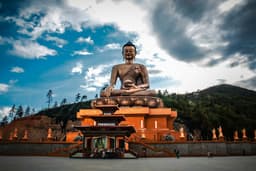
Begin the day at the National Memorial Chorten, a beautifully ornamented stupa completed in 1974 in memory of Bhutan's beloved Third King, His Majesty Jigme Dorji Wangchuck, as a monument to world peace and prosperity – where devoted locals circle in continuous morning prayer in one of the most moving and intimate expressions of living Bhutanese Buddhism.Drive to Kuensel Phodrang to visit the iconic Buddha Dordenma statue, one of the largest Shakyamuni Buddha statues in the world at 51.5 metres, sited amid the ruins of the old Kuensel Phodrang palace and gazing serenely over the entire southern approach to the Thimphu Valley.From Buddha Dordenma, follow the scenic two-hour forest hike up to Changangkha Lhakhang (Changjangkha Temple), one of Thimphu's oldest and most revered hilltop temples, rewarding the gentle ascent with sweeping panoramic views across the full breadth of the Thimphu Valley and surrounding ridge system.Explore Changangkha Lhakhang's atmospheric interiors, where Bhutanese families bring newborn children to receive traditional names and blessings from the resident monks – a deeply personal and living spiritual tradition that has continued unbroken for centuries.Return to Thimphu in the afternoon for a relaxed exploration of the city at leisure – the Centenary Farmers Market, local artisan shops along Norzin Lam, or simply absorbing the gentle pace of daily life in Bhutan's capital. Overnight Thimphu.
Day 3
Thimphu to Phobjikha Valley via Dochula Pass (3,088m) – 108 Chortens & Gangtey Monastery
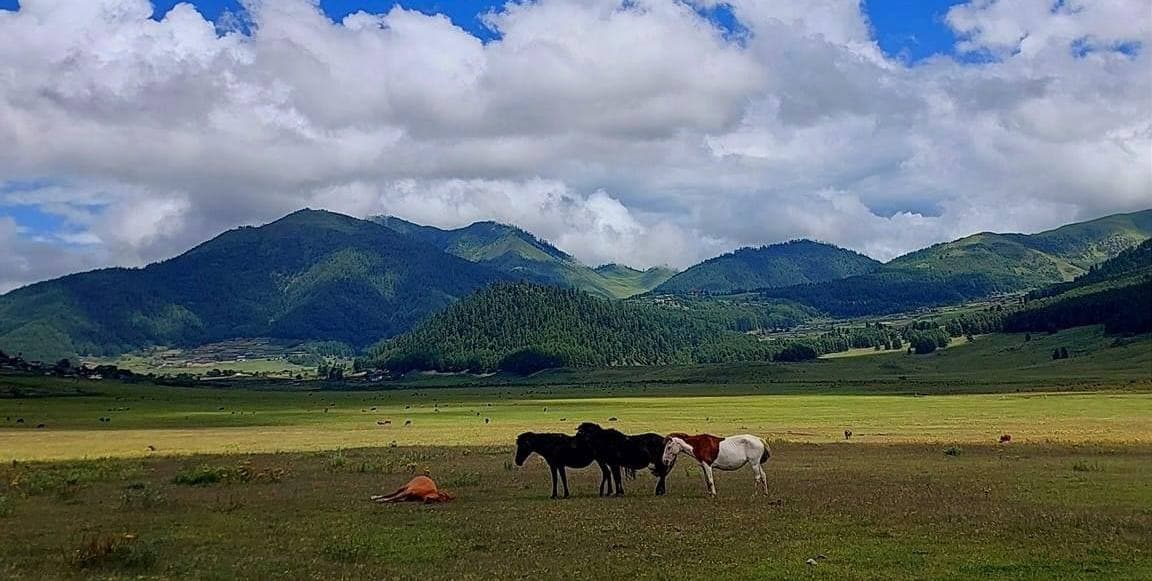
Depart Thimphu after an early breakfast and begin the scenic climb toward Dochula Pass at 3,088m, one of Bhutan's most iconic high-altitude viewpoints and a highlight of any cultural tour itinerary through the kingdom.Arrive at the pass to find the 108 Druk Wangyal Chortens standing in neat, atmospheric rows, and on clear days a sweeping panoramic view of the Eastern Himalayan range stretching endlessly toward the Tibet border – including Gangkar Puensum at 7,497m, the highest unclimbed peak on earth and Bhutan's highest summit.Continue the descent from Dochula into the warm subtropical Wangduephodrang Valley approximately 1,700m below the pass, pausing in Wangduephodrang town for lunch before climbing back eastward into cooler mountain terrain.Arrive in the beautiful Phobjikha Valley, a vast U-shaped glacial basin also known as Gangteng Valley, famed as the protected winter refuge of the endangered black-necked crane (Grus nigricollis), which migrates annually from the arid Tibetan Plateau to spend the colder months in this remote and tranquil highland sanctuary.Visit Gangtey Monastery (Gangtey Gonpa), a centuries-old Nyingma tradition monastery established in the 17th century and perched dramatically on a forested ridge above the valley floor, offering commanding views of the entire Phobjikha basin below.Settle into the hotel and spend the evening absorbing the extraordinary stillness and natural beauty of Phobjikha – one of Bhutan's most ecologically significant and visually pristine valley environments. Overnight Phobjikha Valley.
Day 4
Phobjikha Valley Full Day – Gangtey Nature Trail, Black-Necked Crane Information Centre & Valley Exploration
Spend a full and deeply rewarding day exploring Phobjikha, a vast glacial valley of approximately 163 square kilometres that has been declared a protected wildlife zone managed by the Royal Society for the Protection of Nature (RSPN), sheltering 14 globally threatened species including the iconic black-necked crane.Begin with a morning walk along the Gangtey Nature Trail, looping through open marshland, ancient pine forest, and traditional village settlements at the heart of the valley floor – one of the finest easy walking experiences available anywhere in Bhutan.Visit the Black-Necked Crane Information Centre, where a comprehensive and beautifully presented exhibition explains the remarkable annual migration of Grus nigricollis from the Tibetan Plateau – including the extraordinary local tradition that the cranes are said to circle Gangtey Monastery three times upon arriving each October, and repeat the ritual before departing in spring.Explore the deeper reaches of the Phobjikha valley on foot or by vehicle, where traditional Bhutanese farmhouses, grazing yaks, and the vast open sky create a landscape of rare and unhurried beauty that feels entirely removed from the modern world.Return to Gangtey Monastery in the afternoon for a more leisurely second visit, exploring its decorated prayer halls, resident monk community, and the elevated ridge views that stretch across the entire protected valley below.Spend the evening in quiet reflection at the hotel, surrounded by the natural silence of Phobjikha – a stillness punctuated only by the distant calls of birds and the soft sound of wind moving through the pine forest. Overnight Phobjikha Valley.
Day 5
Phobjikha Valley to Punakha via Chimi Lhakhang – Fertility Temple in Lobesa Valley
Depart Phobjikha after breakfast and begin the scenic drive westward toward Punakha, Bhutan's former royal capital and one of the most historically significant and naturally beautiful valley regions in the entire kingdom.Stop en route at Chimi Lhakhang, a charming hilltop fertility temple set on a knoll in the Lobesa Valley and dedicated to the revered 15th-century saint Lama Drukpa Kuenley – the 'Divine Madman' – who used humour, unconventional teachings, and unexpected methods to spread Vajrayana Buddhism across the region in a manner that remains deeply loved and celebrated in Bhutanese culture.Reach Chimi Lhakhang via a pleasant 30-minute walk across scenic rice paddies and farm fields, the gentle path through agricultural Bhutan offering a beautifully grounded contrast to the highland wilderness of the previous two days.The temple is widely revered as Bhutan's most significant fertility pilgrimage site, believed to bless childless couples who pray here with children – its atmosphere carrying a warmth and intimacy quite different from the more ceremonial dzong architecture encountered elsewhere on the tour.Continue the drive to Punakha, arriving in the warm, subtropical valley by early afternoon with time to settle in before a full day of Punakha exploration tomorrow. Overnight Punakha.
Day 6
Punakha – Khamsum Yulley Namgyal Chorten Hike, Punakha Dzong & Suspension Bridge
Begin the morning with a scenic one-hour hike through golden rice paddies and quiet pine forest to reach Khamsum Yulley Namgyal Chorten, a magnificent four-storey temple standing on a strategic ridge above the Punakha Valley with sweeping panoramic views of the terraced river plains, farmland, and surrounding Himalayan ranges.Built over nine years by skilled Bhutanese artisans who consulted sacred Buddhist scriptures rather than conventional engineering references, this unique architectural masterpiece was commissioned by Her Majesty the Queen Mother and dedicated to the peace, stability, and well-being of Bhutan and all sentient beings.Explore the richly decorated interior with its traditional thangkas, painted murals, and religious iconography before descending to the valley, the full sweep of the Punakha landscape unfolding in every direction from the ridgeline.In the afternoon, visit the magnificent Punakha Dzong, built at the sacred junction of the Pho Chhu (Father River) and Mo Chhu (Mother River) – widely regarded as the most beautiful dzong in Bhutan, serving as the country's royal capital until 1955 and the historic site of the first coronation of the Wangchuck dynasty in 1907.Explore the richly decorated courtyards, painted corridors, and historic lhakhangs of Punakha Dzong, where the most sacred statue has survived centuries of fires, earthquakes, and floods and where the full weight of Bhutan's royal and monastic history is palpably present in every carved beam and painted wall.Conclude the day with a walk across the Punakha Suspension Bridge, one of the longest traditional suspension bridges in Bhutan, where prayer flags flutter above the rushing Pho Chhu below and sweeping valley views stretch in both directions. Overnight Punakha.
Day 7
Punakha to Paro – Ta Dzong National Museum, Rinpung Dzong & Traditional Bhutanese Dress
Depart Punakha after breakfast and begin the scenic drive back toward the Paro Valley, the familiar mountain roads carrying a new depth of appreciation after six days of immersive Bhutanese cultural and natural experience.Arrive in Paro and begin with a visit to Ta Dzong (National Museum of Bhutan), originally constructed in 1646 as a cylindrical watchtower by Zhabdrung Ngawang Namgyal to protect Rinpung Dzong – now housing a remarkable and wide-ranging collection of Bhutanese art, armour, textiles, coins, thangkas, and natural history spanning over a thousand years of the kingdom's heritage.Descend from Ta Dzong along the traditional stone-inlaid trail to the magnificent Rinpung Dzong (Paro Dzong), built in 1646 and housing both the monastic body of Paro and the district's administrative offices – the approach made through the covered traditional Nemi Zam bridge with beautiful views of the dzong's whitewashed walls and layered rooftops from below.Take advantage of a special cultural opportunity to wear traditional Bhutanese dress – the kira for women and gho for men – for photographs against the stunning backdrop of Rinpung Dzong and its historic wooden bridge, an experience that provides a genuinely personal connection to Bhutanese living heritage.Spend the evening on a leisurely stroll through Paro town's traditional wooden-fronted shops, local cafés, and artisan stalls, browsing Bhutanese handicrafts, woven textiles, and locally made products in preparation for tomorrow's Tiger's Nest hike. Overnight Paro.
Day 8
Tiger's Nest Monastery Hike – Paro Taktsang (3,120m) | 4–5 Hours Round Trip
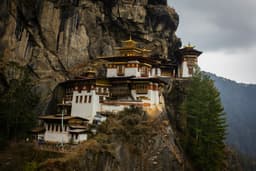
Begin Bhutan's most iconic and universally celebrated hike with an early morning start toward the Taktsang trailhead, where the path immediately enters a world of fragrant blue pine forest, colourful prayer flags, and the distant silhouette of Paro Taktsang clinging impossibly to the sheer granite cliff face 900 metres above the Paro Valley floor.Ascend steadily over 2–3 hours to reach Taktsang Palphug Monastery (Tiger's Nest) at 3,120m – Bhutan's most sacred and globally recognised landmark, where Guru Rinpoche (Padmasambhava) is believed to have arrived on the back of a tigress in the 8th century and meditated in the caves below before establishing Vajrayana Buddhism throughout the kingdom.The Taktsang Cafeteria viewpoint at the halfway mark offers one of the most photographed perspectives in all of Bhutan, where the monastery's white walls and golden rooftops against the vertical cliff face create the defining image of the kingdom – an unforgettable stopping point that rewards even those who choose not to climb further.Continue the final ascent to the monastery complex and explore its interconnected sacred halls, altar rooms, and prayer chambers, each space filled with centuries of unbroken devotion, rare religious murals, and a profound spiritual stillness rooted deep within the mountain granite itself.Descend over 1.5–2 hours, completing the full round-trip in approximately 4–5 hours and returning to the valley with a well-earned sense of accomplishment and a memory that perfectly caps this nine-day Best of Bhutan cultural and nature journey.Spend the afternoon at leisure in Paro for final shopping, exploration, or simply resting in the valley before tomorrow's departure. Overnight Paro.
Day 9
Departure from Paro International Airport – End of Best of Bhutan Tour
Wake to a final quiet morning in Paro, where the crisp valley air, soft light on the surrounding pine ridges, and the unhurried Bhutanese rhythm make the prospect of departing feel gently reluctant after nine deeply immersive days of culture, nature, and Himalayan landscape.Enjoy a last breakfast in Bhutan, taking a reflective moment to absorb the full arc of the journey – Tiger's Nest at dawn, the black-necked cranes of Phobjikha Valley, Gangtey Monastery above the glacial basin, Punakha Dzong at the river confluence, the 108 chortens at Dochula Pass, and the warmth of Bhutanese hospitality at every step.Complete final packing and check out, carrying not only carefully chosen Bhutanese souvenirs but a genuine and lasting connection to the extraordinary spirit, landscape, wildlife, and people of this remarkable Himalayan kingdom.Transfer to Paro International Airport (PBH) for your onward flight – the same serene and scenic gateway through which this nine-day Best of Bhutan Tour first began, with Rinpung Dzong watching over the Pa Chhu river one final time in the soft morning light.As the flight lifts off and the ancient dzongs, glacial valleys, prayer-flag-lined passes, and snow-capped Himalayan peaks of Bhutan slowly dissolve beneath the clouds, allow the memories of ancient monasteries, misty mountain passes, and the warm hospitality of the Bhutanese people to settle into something permanent and deeply personal.
Know, before you book
Please note: Seats are subject to availability at time of booking.
Airline: On group tours we fly with group-friendly airlines.
Economy class by default.
Upgrades to Business / First Class available on request.
Tour Details
Tour Information
Read this to prepare for your tour in the best way!
- Airfare (Economy class) (optional)
- 3-star and above hotel accommodation (twin sharing)
- Daily breakfast ,Lunch & dinners
- English-speaking Tour Manager throughout
- Government Taxes
- Travel insurance (optional)
- Sightseeing Fees & Visa
Need to Know
- Carry comfortable walking shoes — cobblestone streets ahead!
- Currency: Dollar/ Crypto. ATMs are widely available.
- Weather in June: 18 °C – 25 °C. Light jacket recommended.
- Sustainable Development Fee (SDF) of USD100 per night per adult and USD50 for children aged 5 to 12 years old. Children below 5 years are waived.
- A one-time visa application fee of USD40.
- For Indian: Sustainable Development Fee (SDF) of Rs.1200 per night per adult and Rs.600 for children aged 5 to 12 years old. Children below 5 years are waived and Government of Bhutan will provide on arrival visa.
Cancellation Policy
| Days before departure | Cancellation charge |
|---|---|
| 60+ days | 10% of tour cost |
| 30–59 days | 25% of tour cost |
| 15–29 days | 50% of tour cost |
| 0–14 days | 100% of tour cost |